

- By Yoav Guttman
As retailers head into peak season, revenue gets most of the attention.
But several statistics from a recent holiday readiness report highlight why finance, procurement, AP, and audit teams should be just as focused on protecting margin.
Here are our key takeaways from our recent guide, The Retailer’s Holiday Readiness Guide 2026:
- Around 20% of a typical retailer’s annual revenue is generated during the winter holiday season.
When that much business is concentrated into just a few weeks, even small process breakdowns can create meaningful financial impact. It’s one reason why holiday readiness should extend beyond inventory and staffing plans to include controls, reconciliation, and recovery processes.
- Holiday spending surpassed $1 trillion for the first time in 2025.
The scale is staggering.
More transactions mean more opportunities for pricing discrepancies, missed funding, duplicate payments, billing errors, and compliance issues to go unnoticed.
- Retailers processed $706 billion in merchandise returns in 2025, including $100 billion tied to preventable loss from return fraud and abuse.
Returns are often viewed as a customer experience issue. Increasingly, they’re also a finance and profitability issue.
- Buy Online, Return In Store (BORIS) transactions accounted for $208 billion, or 29% of all returns.
As omnichannel retail continues to grow, the complexity of returns, credits, reimbursements, and vendor recovery processes grows with it.
- Experts estimate that 5% of annual revenue is lost to fraud, with holiday volume and urgency amplifying the risk.
Temporary staffing, rushed approvals, high transaction volumes, and outdated vendor data can create ideal conditions for duplicate payments, phantom vendors, and invoice manipulation.
The takeaway?
Holiday success isn’t just measured by sales performance. It’s measured by how much of that revenue ultimately turns into profit.
The retailers that enter January in the strongest position are often the ones that spent just as much time preparing for margin protection as they did preparing for revenue growth.
Working Capital Forum Europe
We’ll be in Amsterdam for Working Capital Forum Europe 2026, discussing a question we’re hearing more often from finance and procurement leaders:
How much working capital opportunity is hiding in data you already have?
Join our session, “Unlocking Working Capital with Data and AI,” where we’ll explore how organizations are:
- Identifying hidden cash opportunities across payables, receivables, and the supply chain
- Using analytics to uncover financial leakage and optimize payment strategies
- Exploring the role of AI in moving from insight to action
If you’ll be attending, I’d love to connect. Stop by and meet the PRGX team to discuss your working capital priorities and learn how leading organizations are turning better data into measurable financial results.
Will you be there? Let’s connect.

Real Talk About AI in Procurement and Finance
Every company seems to have an AI strategy right now.
Most of the conversation is about productivity. Faster emails. Faster summaries. Faster reporting.
That’s fine. But let’s be honest: procurement, AP, audit, and finance leaders don’t get measured on how many documents they generate. They get measured on how much value they recover, protect, and create.
That’s where AI starts getting interesting.
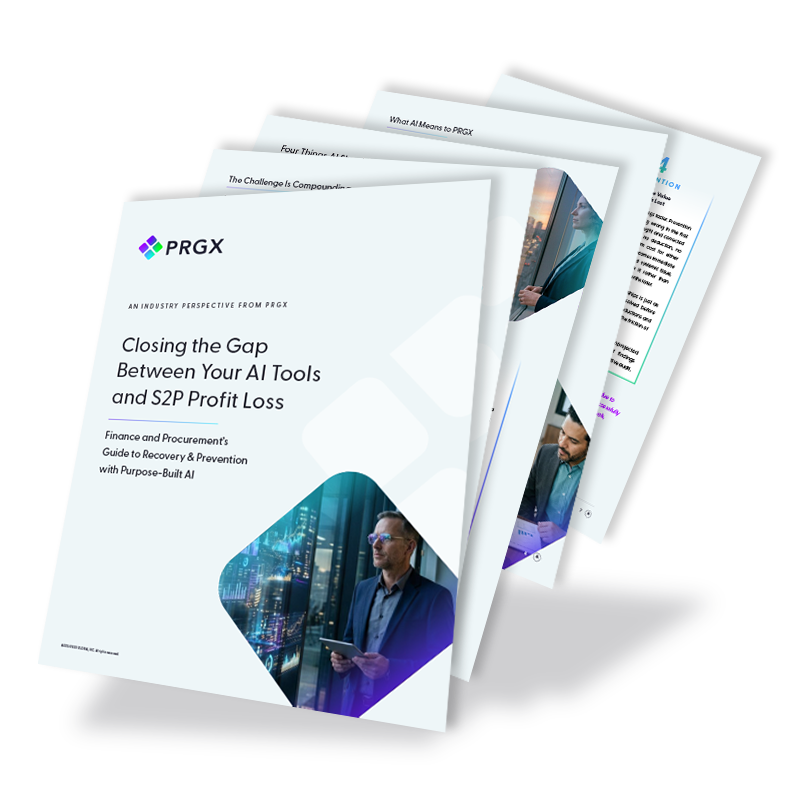
The most impactful AI applications aren’t helping someone write an email. They’re helping teams identify missed credits in supplier statements, uncover hidden value buried in supplier communications, detect contract compliance risks, and stop overpayments before cash leaves the business.
We’re seeing four areas where purpose-built AI can drive measurable financial outcomes:
- Statement Audits: Surface credits, deductions, and recovery opportunities hidden in supplier statements that would otherwise require extensive manual review.
- Email Audits: Turn millions of supplier emails and attachments into structured audit intelligence, helping teams uncover rebates, promotional funding, pricing agreements, and claim opportunities.
- Contract Insights: Extract and analyze contract terms at scale to identify compliance risks, pricing discrepancies, and recovery opportunities across supplier portfolios.
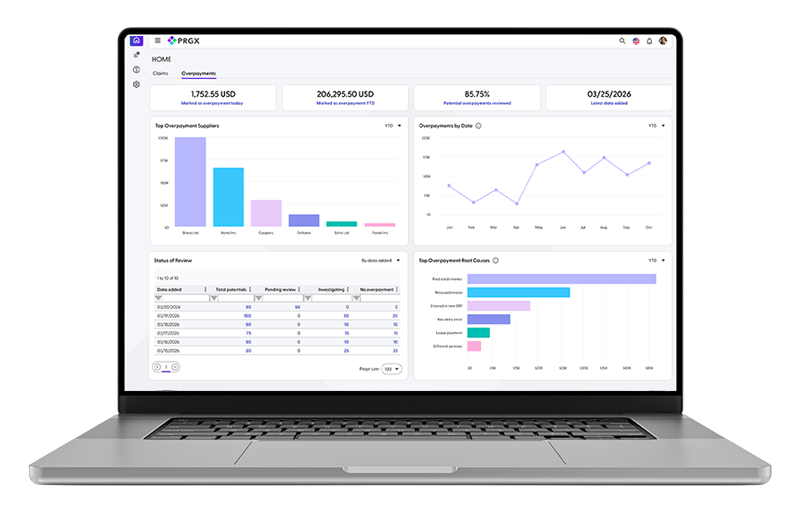
- Overpayment Prevention: Detect duplicate invoices, invoice variations, and payment anomalies before payment execution, helping AP teams prevent errors instead of just recovering them later.
The common thread isn’t automation.
It’s helping experts focus on high-value decisions while AI handles the pattern recognition, document processing, and data analysis that humans simply can’t perform at scale.
The next phase of AI in finance and procurement won’t be defined by who has the most AI tools.
It will be defined by who can turn AI into measurable business outcomes.
Recover more. Prevent more. Comply better. Protect margin.
That’s when AI moves from technology initiative to business strategy.
Contract Visibility Is Improving. Contract Value Realization Remains the Challenge.
Organizations spend enormous time and effort negotiating contracts. Prices are benchmarked. Rates are negotiated. Rebates are established. Service levels are defined. Payment terms are agreed.
Then the contract gets signed.
For many organizations, that moment is still treated as the finish line. It shouldn’t be.
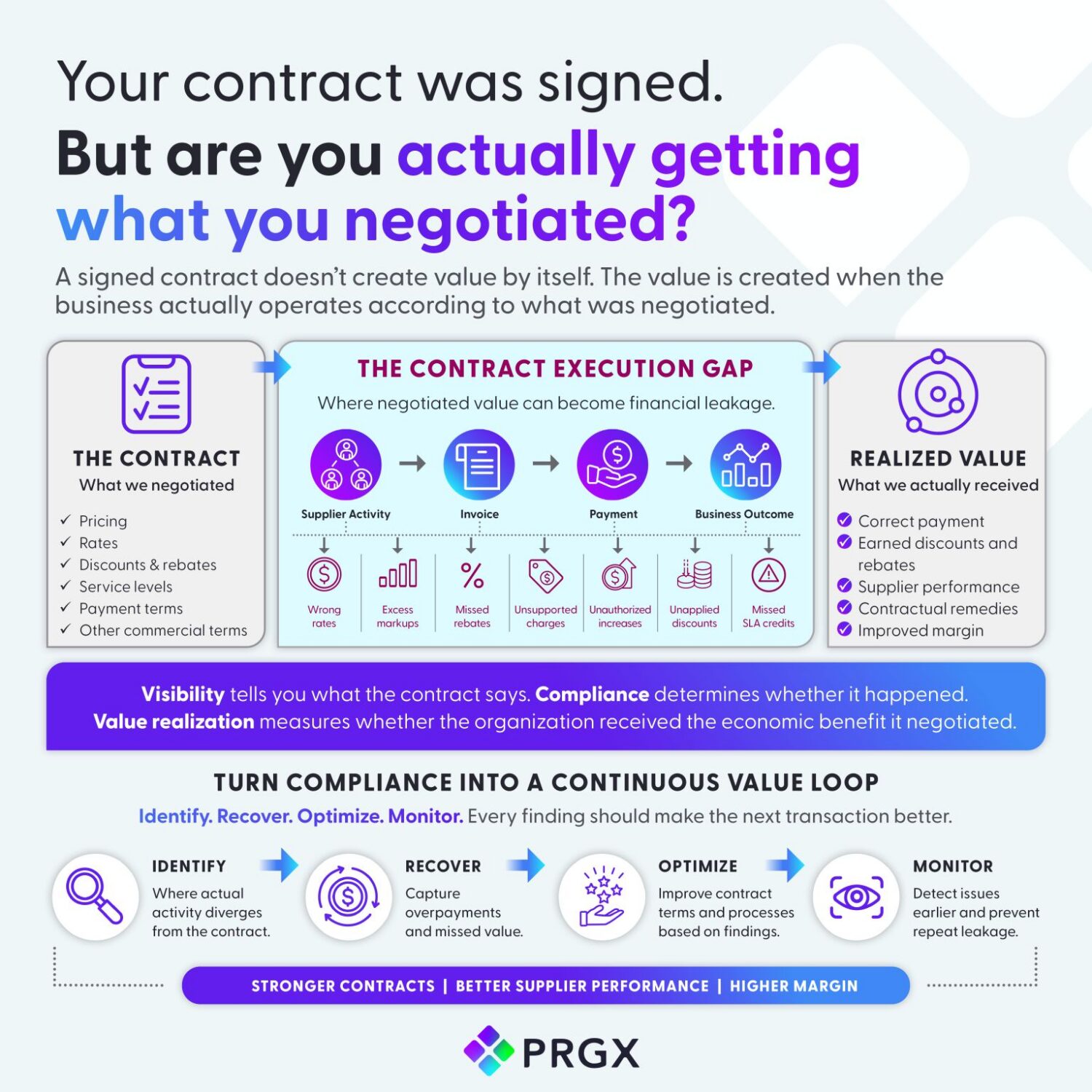
A signed contract does not create value on its own. Value is created when the business actually operates according to what was negotiated.
That distinction has become increasingly important as investments in Contract Lifecycle Management (CLM), AI, and contract analytics improve contract visibility. Today, many organizations can quickly answer:
What did we agree to?
Far fewer can confidently answer:
Did we actually receive what we negotiated?
This is where the Contract Execution Gap emerges. It exists between the contract, the supplier’s activity, the invoice, the payment, and ultimately the business outcome.

A supplier may bill against an outdated rate schedule. A rebate may qualify but never be collected. A contract amendment may change pricing terms without ever reaching downstream systems. A service-level commitment may be missed without the contractual remedy being enforced.
The contract itself may be sound. The challenge is execution.
The next evolution of contract management is not simply improving contract visibility. It is advancing from Contract Visibility to Contract Compliance and ultimately Contract Value Realization.
Because knowing a contract contains a rebate clause is useful.
Knowing the organization earned that rebate but never received it is valuable.
As procurement and finance leaders look for new sources of margin improvement, the opportunity may not be found in negotiating better contracts. It may be found in realizing more value from the contracts already in place.
The question worth asking is not whether your contracts are well negotiated.
It’s whether the value negotiated is actually reaching the bottom line.
The Next Evolution of AP Recovery: Prevention
For decades, Accounts Payable recovery programs have focused on one question:
How do we recover overpayments after they’ve happened?
It’s still an important question. But a better one is emerging:
Why are we waiting until after payment to find them?
The reality is that overpayments aren’t usually the result of poor AP teams. They’re the result of complexity.
Where AP leaders are beginning to shift their focus is from recovery alone to prevention and recovery together.
This creates a continuous improvement cycle:
Identify → Prevent → Recover → Optimize
Question for AP, Shared Services, and Finance leaders: What percentage of your overpayment effort today is spent on prevention versus recovery? And where do you think the biggest opportunity exists?
As we wrap up this edition of S2P Edge, one theme stands out: the biggest opportunities often come from better execution, not bigger initiatives.
As holiday season gets underway, we’d like to thank our customers, partners, and readers for being part of the conversation.
Whether we’ll see you in Amsterdam at Working Capital Forum Europe, online at an upcoming webinar, at a future event, or simply on a Teams call, the folks behind S2P Edge would love to hear from you.
Until next time, enjoy the holiday season and keep looking for the value hidden in plain sight.